
AI-generated illustration — not a retailer product photo.
Split My Fare is a UK rail booking site built around one idea: splitting a single journey into several tickets to lower the price. This review explains what the service does, where it looks strong, where it falls short, and which travellers are likely to get the most from it. It is editorial guidance based on the merchant's published pages and terms. It is not based on personal testing.
What Split My Fare Is and How Split Ticketing Works
AI-generated illustration — not a retailer product photo.
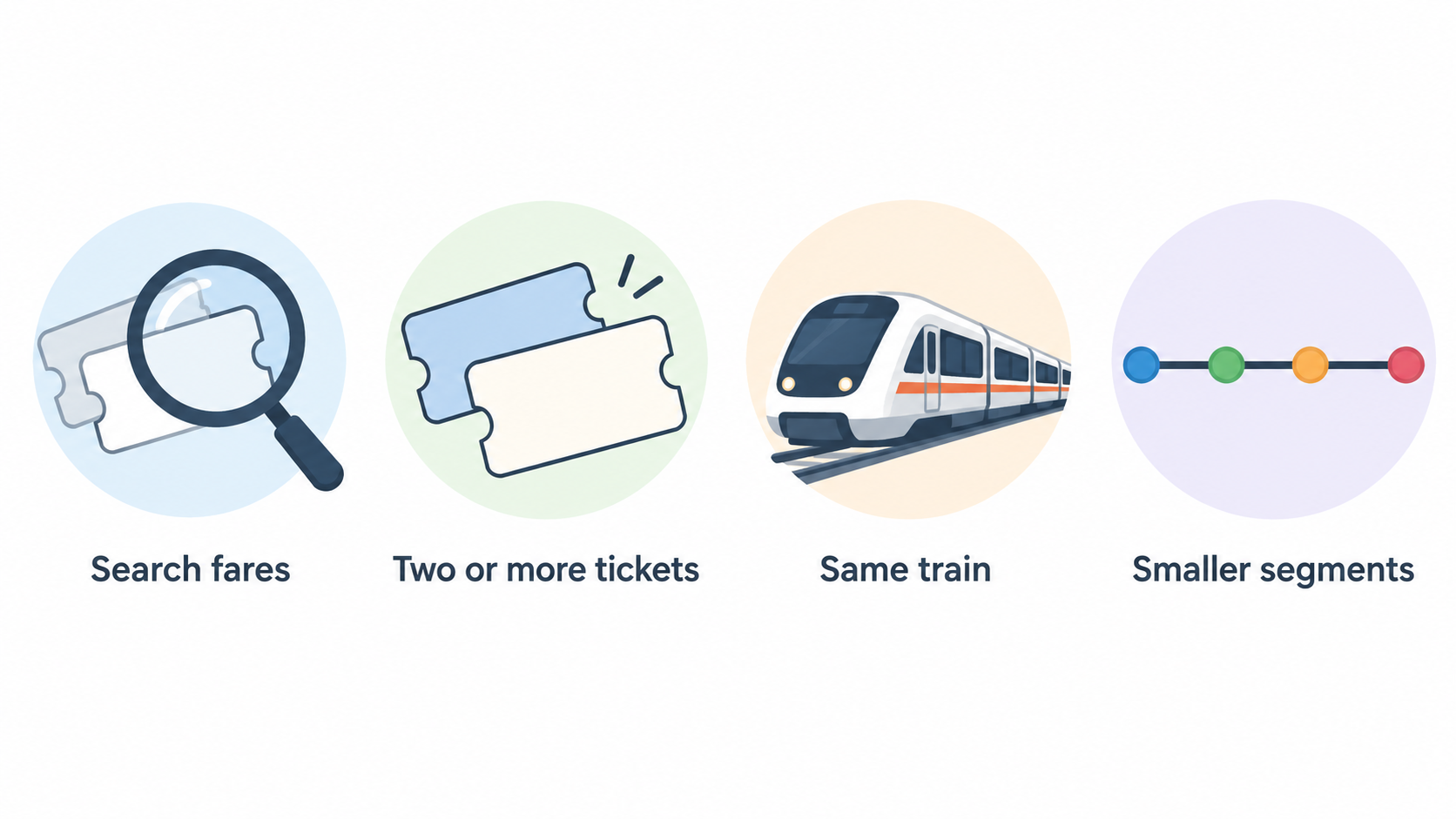
Split My Fare describes itself as a booking site that searches all its fares, including Advance tickets and split fares, to find the cheapest rail tickets for your journey. Its main pitch is that it specialises in split tickets and does the searching for you.
Split ticketing means you book two or more tickets rather than buying one through ticket for the journey. You still travel on the same train, and in most cases you don't change trains. On paper, your journey is divided into smaller segments. In practice, you sit on the same service. The merchant's own example is a Leeds to Glasgow trip where you stay on the same route without extra changes.
The merchant says the only condition is that your train must stop at every station shown on your tickets. If you are asked, you should show the correct ticket for the part of the journey you are on. The merchant also states that split ticketing is legal and that it can apply to Singles, Returns and Season Tickets.
Everything in this article is attributed to the merchant's published pages unless stated otherwise. The savings figures are the merchant's own claims and have not been independently verified.
How Booking with Split My Fare Works
AI-generated illustration — not a retailer product photo.
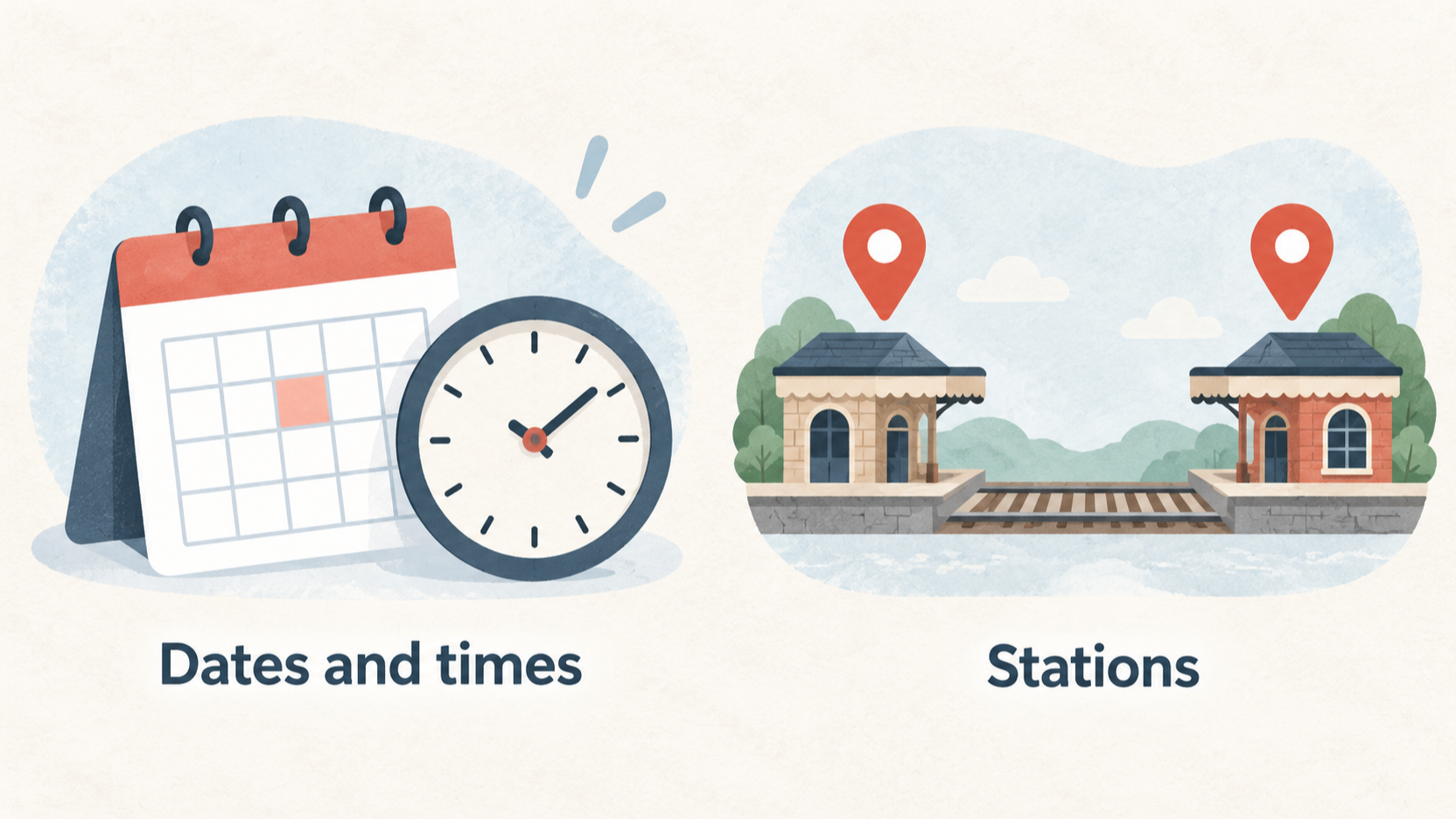
The merchant sets out a short step-by-step flow. Have these details ready before you search:
- Dates and times. You enter when you want to travel. The merchant says you can buy most Advance tickets up to 12 weeks before your journey.
- Stations. You enter your departure and arrival stations.
- Passengers. You enter how many people are travelling. The merchant says groups of at least three can save up to 34% with a GroupSave discount.
- Railcard. You add your railcard if you have one.
Behind the search, the merchant says its system can split a journey into anywhere from 2 to 10 separate tickets, depending on the route. It also says it applies railcard discounts across the whole combination of tickets. You don't have to work out the combinations yourself.
After booking, the merchant says tickets are delivered as e-tickets that you download to your phone. The site also points to an app and a mobile site. If you prefer paper tickets or ticket collection, check the merchant's help pages for current options before you rely on them.
Where Split My Fare Stands Out
AI-generated illustration — not a retailer product photo.
Based on the merchant's published material, there are several points in its favour.
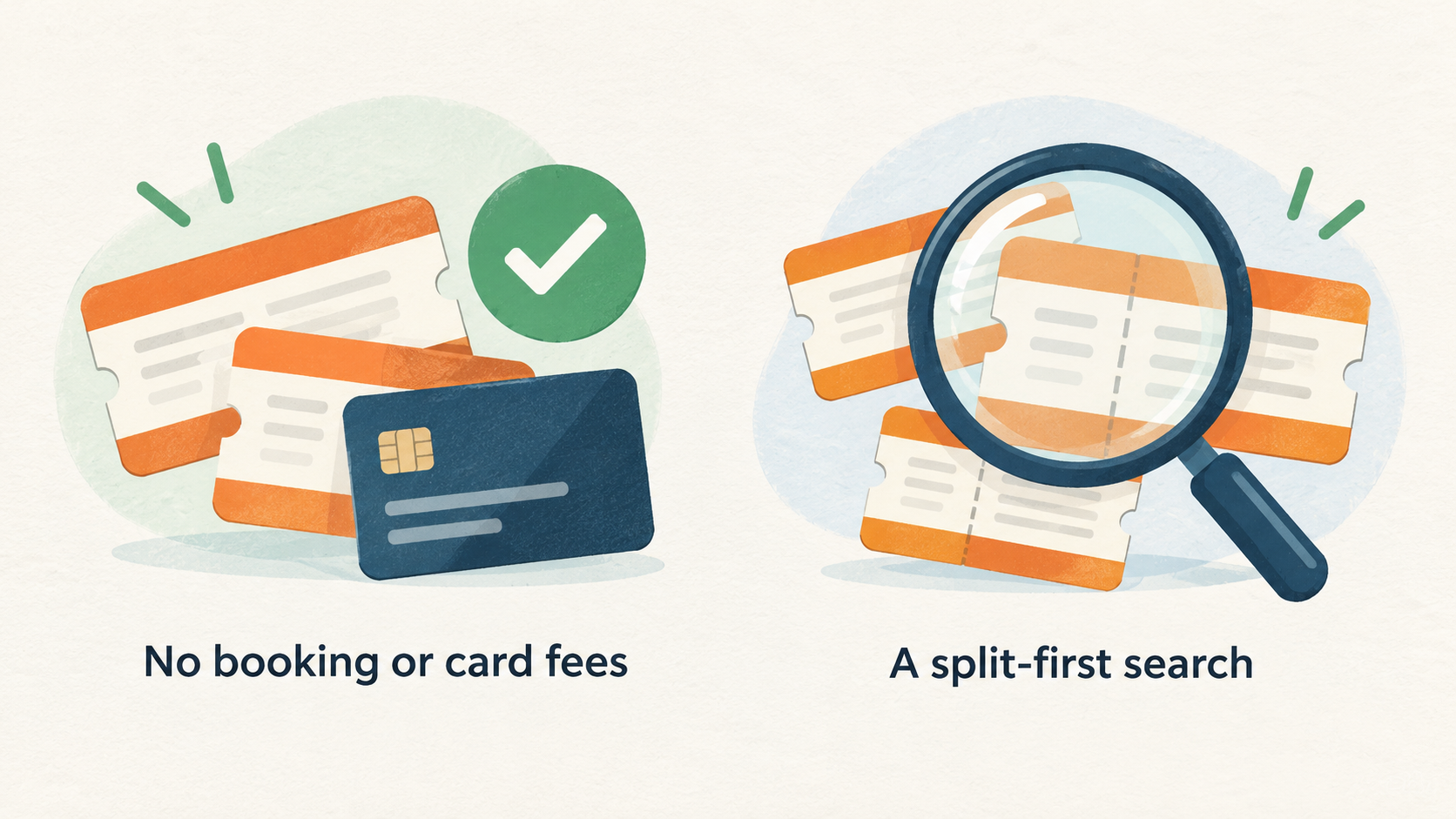
No booking or card fees. The merchant states that it charges no booking or card fees. This matters for split tickets because you may be buying several tickets for one trip. Per-transaction or per-ticket fees would eat into any saving.
A split-first search. The merchant says finding split tickets is what it specialises in. Checking fare combinations by hand across several stations would be tedious. Automating that work is the clearest benefit of using a specialist.
Railcard handling. According to the merchant, railcard discounts are applied across all the tickets in a split combination. If you travel with a railcard, that is worth checking when you compare prices.
Group discounts. The merchant advertises a GroupSave discount of up to 34% for groups of at least three passengers.
Speed. The merchant presents the service as quick, with e-tickets downloaded to your phone straight after purchase.
Savings claims, with caveats. The merchant advertises savings of up to 90% on some fares and an average customer saving of 26% across its bookings. These are the merchant's own figures. They vary by route and cannot be assumed for any particular trip. Treat them as an upper bound and an average, not a promise.
Where Split My Fare Falls Short
The drawbacks below come from reading the published terms. They are not findings from hands-on use.
Unverified savings. The "up to 90%" and "26% average" headlines come from the merchant. We did not find independent verification in the sources reviewed. Savings depend on the route, the date and the ticket type, and some journeys may have no cheaper split at all.
Reliance on the same train stopping everywhere. Split tickets only work if the train stops at each station on each ticket. You need to stay on the intended service and carry the right ticket for each segment of the journey.
More tickets can mean more admin. Holding several tickets for one trip is harder to manage when plans change. The merchant says Advance, or fixed, tickets can only have their date and time changed. If your trip is likely to move, that is a real constraint.
Unclear coverage beyond rail. The sources reviewed focus on rail. They do not establish whether the site covers coach or Eurostar journeys. If you want one place to book those, check elsewhere.
Curated testimonials. The reviews shown on the merchant's own website are chosen by the merchant. They are not independent evidence, so we haven't relied on them here.
Refunds, Amendments and Delay Repay
For fixed-price tickets, flexibility is the biggest practical trade-off. This is what the merchant's help page says.
Amendments. The merchant says all tickets are amendable. If you hold fixed or Advance tickets, you can only change the date and time of departure.
Booking mistakes. If you made a mistake with your booking, you can claim a refund of the total cost of your tickets within 1 hour of purchase when the booking is for a future date. For same-day travel, the window is 15 minutes. These windows are short, so check your booking straight away.
Cancellations. The merchant says flexible tickets are refundable. Fixed or Advance tickets are refundable only for medical reasons, or if you experienced cancellations on your journey. In those cases, the merchant says it can process a refund if the tickets are unused. If they have been used, you need to contact the train operator you travelled with.
Delay Repay. If your journey is delayed, you claim compensation through the train operator's Delay Repay scheme, not through the booking site. The merchant says claims must be submitted within 28 days of the delayed journey. The compensation depends on the length of the delay and the type of ticket you bought. The help page also states that you are entitled to a full refund if you arrive more than 1 hour late.
The practical lesson is simple. A cheaper Advance split can come with less room to change your mind. Decide how much flexibility you need before you buy.
Who Split My Fare Suits and Who Should Skip It
This section is editorial judgement drawn from the published terms. It is not based on testing. A quick way to think about it is to ask four questions. Does your train stop at every split point? Is your trip fixed or flexible? Do you need easy refunds? Do you have a railcard, or a group of three or more? Your answers point towards using the service, comparing first, or skipping it.
It is likely to suit:
- Price-focused travellers with fixed plans. If you can book ahead and are comfortable holding several tickets for one trip, this is the profile the service is built for.
- Commuters and regular travellers. The merchant says splits can apply to Season Tickets, so regular journeys are worth checking.
- Groups and railcard holders. GroupSave and railcard discounts are both advertised as available.
You may prefer to skip it, or be cautious, if:
- You need maximum flexibility. If you expect to change plans often, or dislike carrying multiple tickets, a flexible ticket or a simple single-ticket purchase may suit you better.
- You want one place for rail, coach and Eurostar. Check the coverage before you rely on the site, because the sources reviewed don't establish it.
- You are unsure about a route. Compare the split result with the through fare before you buy.
If you fit the first group and want to see what your own route costs, you can run a search with the merchant. Search first and compare before you pay.
How Split My Fare Compares with Other Booking Options
The merchant says some larger platforms, such as Trainline with its SplitSave feature, have introduced split ticketing. It also says some platforms charge booking or card fees that can wipe out split-ticket savings. That comparison is the merchant's own positioning. Fees and split features change, so check the current position on each site before you decide.
Two points are worth keeping in mind.
Compare the final price. The sensible approach is to compare the total price, including any fees, across two or three sources before you pay. A site with a slightly cheaper ticket can still cost more once fees are added.
The saving comes from the fare structure. A split-ticket saving comes from how rail fares are priced, not from the booking site itself. The same ticket combination may therefore be available elsewhere. The differences between sites are mostly about fees, ease of use and after-sales support.
Buying direct from a train operator may offer simpler after-sales handling in some cases. This is not established by the sources reviewed, so verify it with the operator. It is most relevant if you expect to need a refund or to amend your ticket.
Practical Tips Before You Book
Use this checklist before you click Buy:
- Compare the split total with the through fare, and with a flexible option. Don't assume a split is cheaper on your date. Check it.
- Check that the train stops at every split station. Then stay on that train for the whole journey.
- Use the refund windows to catch mistakes. You have 1 hour for future travel and 15 minutes for same-day travel. Check your dates, times, stations and passenger numbers straight after booking.
- Add any railcard and the correct passenger numbers. The search can only price your trip correctly if it has the right details.
- Keep every e-ticket on your phone. Be ready to show the right ticket for the segment you are travelling on.
- Claim Delay Repay promptly. Submit any claim to the train operator within 28 days of the delayed journey.
Frequently Asked Questions
Is split ticketing legal, and do I have to change trains?
The merchant states that split ticketing is legal. The condition is that your train must stop at each station shown on your tickets. In most cases you do not need to change trains, because you stay on the same service while holding several tickets. If you are asked, show the ticket that covers the part of the journey you are on.
Does Split My Fare charge booking or card fees?
The merchant says it charges no booking or card fees. Because split journeys can involve several tickets, that is a useful point to check against other sites. Always compare the final price including any fees before you pay.
Can I get a refund on Split My Fare tickets if my plans change?
It depends on the ticket type and timing. The merchant says a booking mistake can be refunded in full within 1 hour of purchase for a future date, or within 15 minutes for same-day travel. Flexible tickets are refundable. Advance tickets are refundable only for medical reasons or journey cancellations, and only if they are unused. If the tickets have been used, you need to contact the train operator. Advance or fixed tickets can generally only be amended by date and time.
How do I claim Delay Repay if my split-ticket journey is late?
According to the merchant's help page, you claim through the train operator, not through Split My Fare. Claims must be submitted within 28 days of the delayed journey. The compensation depends on the length of the delay and the type of ticket you held. Check the operator's own Delay Repay rules for the details.
How much can I realistically save with Split My Fare?
The merchant advertises savings of up to 90% on some fares and an average customer saving of 26%. These are its own figures, and they have not been independently verified in the sources we reviewed. Your saving depends on your route, date and ticket type, and some journeys may have no cheaper split. The only reliable way to find out is to compare the result for your trip with the through fare.
Sources
Related reading
- Trainline vs Split My Fare: which is the better fit for UK split-ticket bookings
- Trainline review: booking fees, split tickets, railcards and alternatives
- How to choose a UK train ticket booking site: fees, split tickets and refunds
- How to identify genuine train ticket deals: fees, split tickets and railcard claims
Editorial information: About our editorial team · Read our editorial policy · Read our affiliate disclosure.