
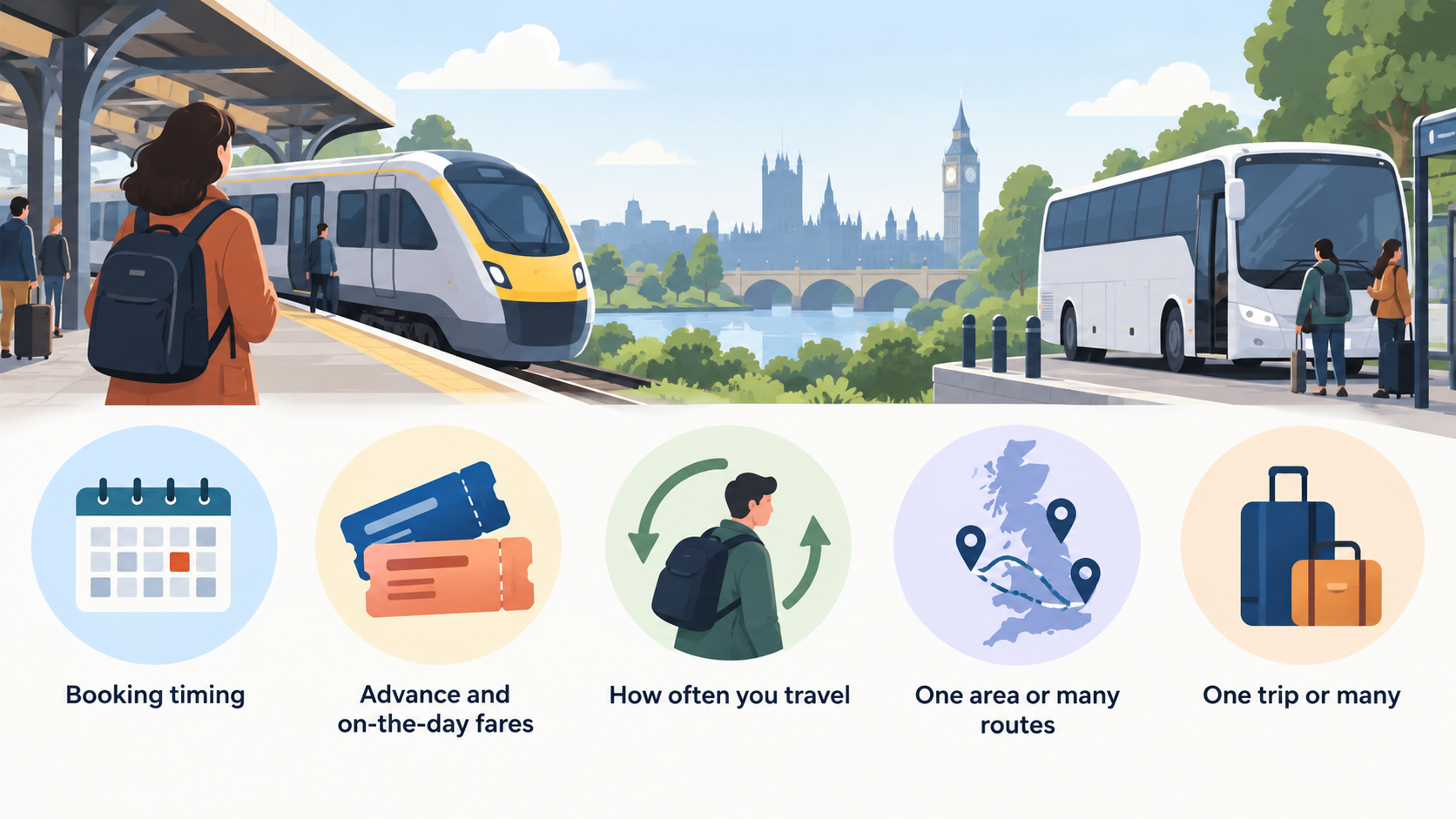
AI-generated illustration — not a retailer product photo.
Why Booking Timing Matters for UK Train and Coach Fares
AI-generated illustration — not a retailer product photo.
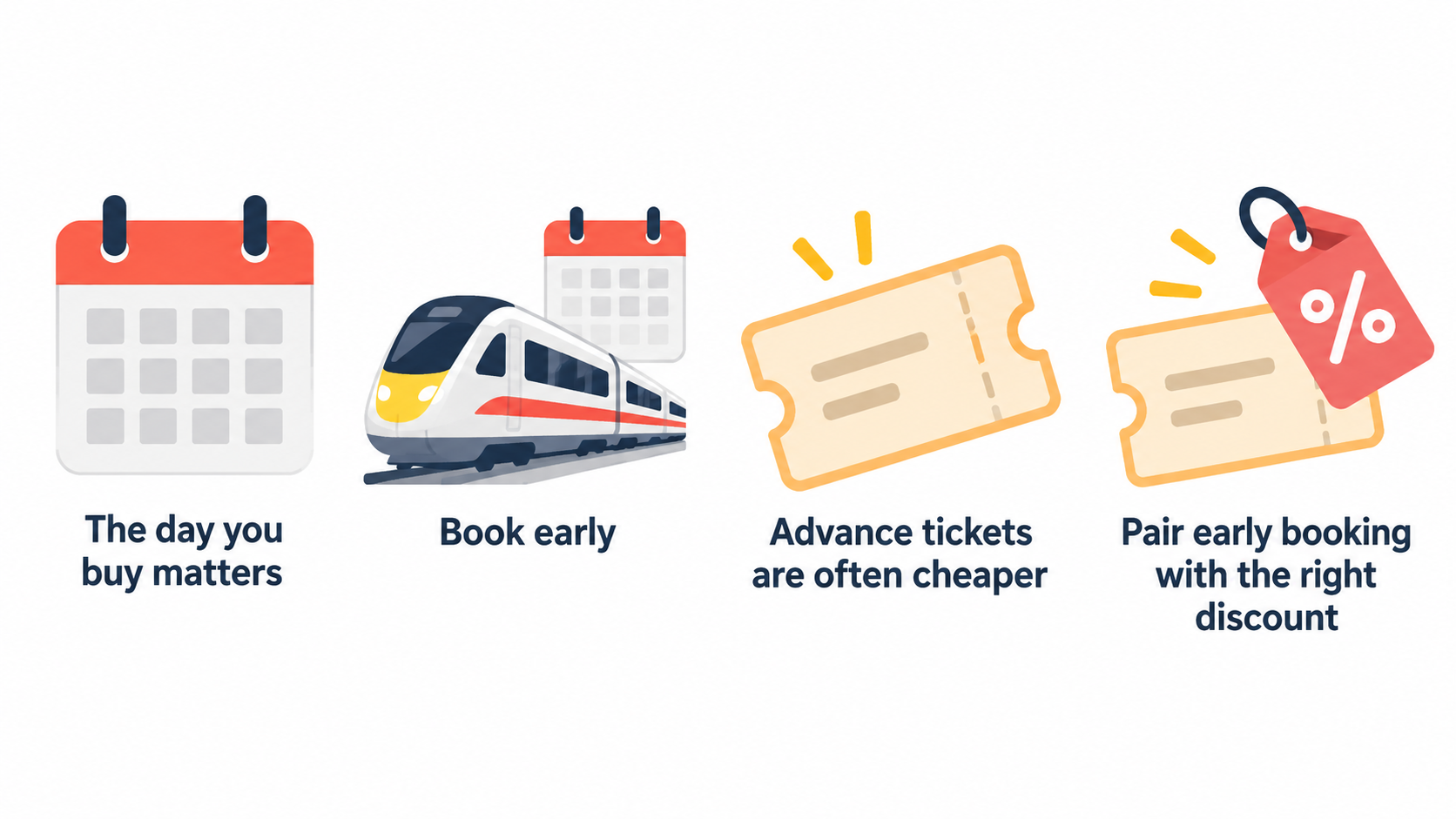
The day you buy a ticket can matter as much as the day you travel. Trainline's cheap-tickets page says train fares usually increase as the travel date approaches, and that booking early is one of the most effective ways to save money. It adds that Advance tickets are often cheaper than buying on the day of travel.
That is the core principle of this guide. It covers UK rail, National Express coach travel and a short look at Eurostar and other European routes, and it shows how to pair early booking with the right discount.
Trainline advertises savings of "up to 61%". Treat that as a marketing ceiling for the best case, not a typical saving. Your own fare will depend on the route, the date and the ticket type.
This is editorial guidance built from published operator and National Rail pages. It is not based on personal testing of the booking sites. Fares, rules and discounts change, so check the current terms on the official page before you pay.
Where Booking Early Saves the Most
AI-generated illustration — not a retailer product photo.
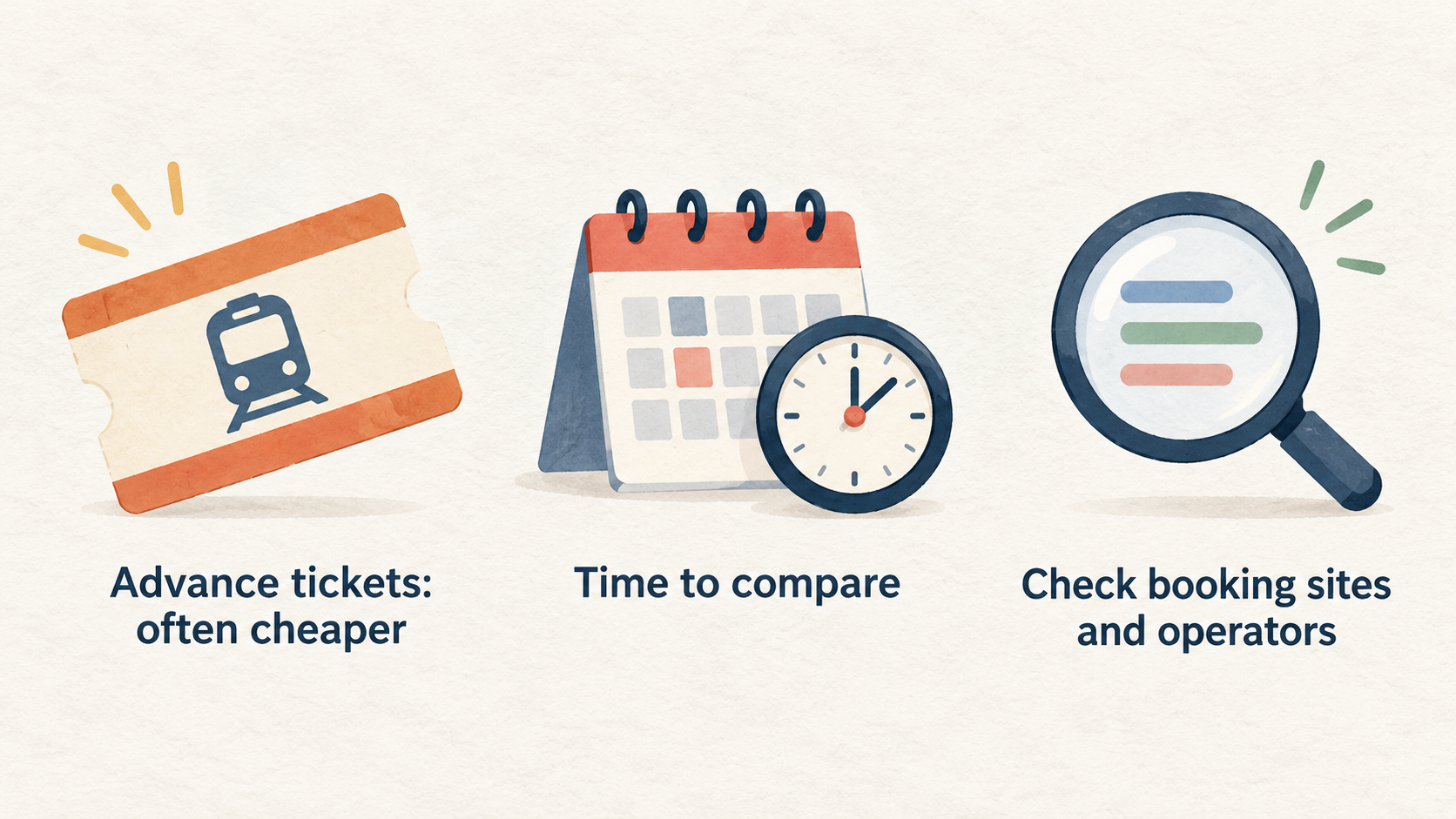
The clearest benefit is the gap between Advance tickets and on-the-day fares. Trainline says Advance tickets are often cheaper than buying on the day. The word "often" matters: the source does not say they are always cheaper.
Booking early also gives you time to compare. If you plan ahead, you can check prices across booking sites and operators before fares rise. Trainline lists cheap options for UK and European routes, including London, Edinburgh and continental destinations. You can use those listings as a starting point for comparison rather than as a guarantee of a particular price.
Early planning also leaves room to add a discount. National Rail says a Railcard takes 1/3 off rail travel, and Trainline's search form includes an "Add railcards" option so you can apply one at the search stage. Whether a discount applies to the specific fare you choose depends on that fare's conditions, so check that the basket shows the saving before you pay.
In practice, early booking works best for trips where the date is fixed, such as a long-distance journey for an event, a holiday or a family visit.
When Booking Early Is Not the Answer
Early booking is not always the best choice. The sources reviewed say Advance tickets are often cheaper, not that they always are. They also do not give a universal booking window, such as a set number of weeks ahead when fares open or are cheapest. Check the operator's own booking calendar rather than relying on a rule of thumb.
Cheaper tickets can come with restrictions on changes and refunds. If your plans might shift, paying a little more for flexibility can be sensible. Read each operator's published terms before you buy.
Coach travel has its own limits. National Express asks you to select a return within 3 months of your outward journey, so open-ended plans do not fit.
Children's rules can also affect last-minute family plans:
- Children under 14 must be accompanied throughout the journey by a responsible person aged 16 or over.
- Children aged 14 to 15 may travel unaccompanied between 5am and 10pm, arriving at their booked destination no later than 10pm.
- Unaccompanied children may be asked for proof of age or a signed letter of permission.
If any of this makes your plans uncertain, wait until you are sure of your dates before locking in a fare you cannot change.
Railcards, Coachcards and Promotions That Cut the Price
Timing is only one lever. These discounts can also lower what you pay:
- 16-17 Saver: 50% off most train fares for 16 and 17-year-olds.
- 16-25 Railcard: 1/3 off rail travel for everyone aged 16 to 25, and mature students.
- 26-30 Railcard: 1/3 off rail travel for everyone aged 26 to 30.
- Disabled Persons Railcard: 1/3 off for you and an adult companion, for people who meet the eligibility criteria.
- Family & Friends Railcard: for up to 4 adults travelling with up to 4 children, with 1/3 off for adults and 60% off for children.
- Network, Senior and Two Together Railcards: National Rail lists these too, along with a Veterans Railcard (nine in total). The reviewed excerpt does not give their details, so check the official page for eligibility and discounts.
Railcards come in 1-year and 3-year versions. National Rail publishes both prices in a comparison table so you can see which suits your usage. A digital Railcard can be stored on up to 2 devices through the Railcard app.
National Rail also lists promotions and Ranger and Rover tickets by operator and region. Examples include Freedom of the North West, Thames Rover and Island Line Day Ranger.
For coaches, National Express lets you add Coachcards when you book. The excerpt reviewed does not state the discount level, so check the Coachcard page for the current terms.
Railcard or Rover: Which Discount Fits Your Trip
AI-generated generic editorial illustration — not a retailer product photo and does not depict the reviewed product or service. Help readers choose between a railcard, a Ranger/Rover ticket and a one-off promotion based on their trip pattern.
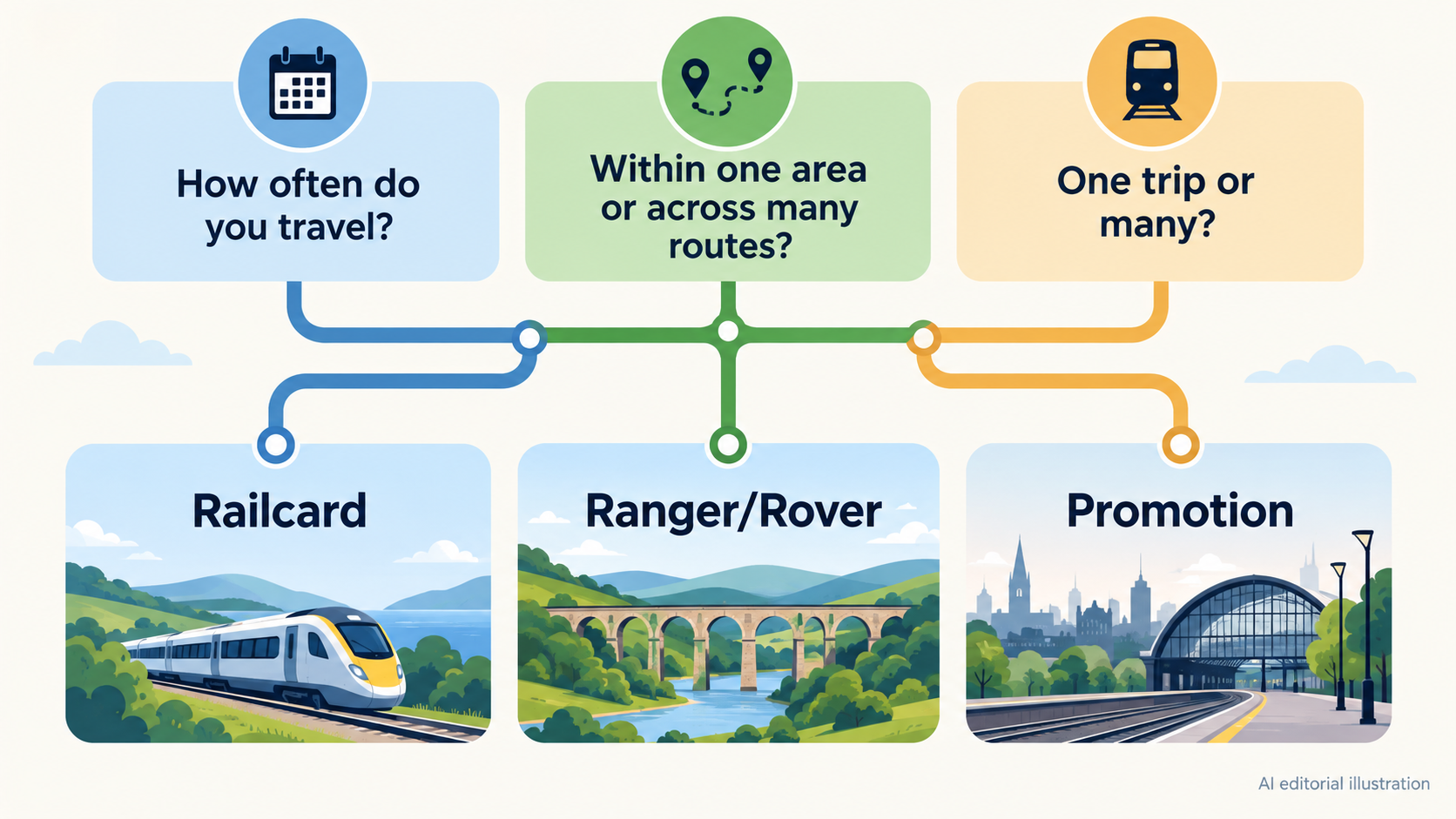
Three questions help you choose: how often you travel, whether you stay in one area or move across many routes, and whether you are planning one trip or many.
A railcard suits repeat travel across routes. It takes 1/3 off most rail travel for the validity period, and National Rail says it "pays for itself in no time". That is the source's own framing, so compare the card's price against your likely spending.
A Ranger or Rover suits concentrated regional trips. These give unlimited travel in a designated area for a day or set days. Examples on National Rail's list include:
- Cardiff & Valleys, a day of unlimited travel on Transport for Wales services.
- Freedom of the South West 3 in 7 Day Rover.
- Island Line Day Ranger, with unlimited travel on Island Line services for the day.
A one-off promotion suits a single trip or occasion. National Rail's promotions list includes local products for specific groups, such as Unizone for students in Brighton or Worthing.
In short, a railcard fits scattered journeys across the year and a Rover fits a busy few days in one region. Each product has its own area, validity and conditions, so read the official page before you buy.
Booking Windows by Journey Type
The reviewed sources do not give release dates for fares, so this section sets out how to plan rather than a fixed calendar.
- Fixed-date long-distance trips: Book as early as the operator allows, because fares usually rise towards the travel date. Check the operator's own booking calendar to see how far ahead tickets are on sale.
- Flexible trips: Compare different days and times, and weigh Advance fares against on-the-day pricing. Trainline lists an Advance Ticket Alert service in its navigation, which you can check for notification of new fares.
- Coach return trips: National Express returns must fall within 3 months of the outward journey, so plan your return date accordingly.
- Regular regional travel: Instead of timing each trip, weigh a Rover or a season ticket product. Trainline lists Season, Flexi Season and Digital Season tickets.
- European trips: Trainline lists Eurostar and other operators. The reviewed sources do not state their booking horizons, so check each operator's own booking page.
Checking Fees, Split Tickets and Refund Rules Before You Pay
An early booking only saves money if the final total is lower. Before you pay, check a few things.
Trainline lists split tickets and group train tickets among its products. The page reviewed does not say how much either might save, so treat them as options to compare rather than guaranteed savings.
Booking fees and refund terms vary by platform. Read the fee and refund terms on each site before paying. This guide does not quote fee amounts because the reviewed sources do not give them.
Compare the final basket total, including any fee, across booking sites and directly with the operator.
Check that your discounts are applied before payment. Make sure any railcard or coachcard shows in the basket and that the passenger types match the people travelling. A wrong passenger type or a missing discount can change the price or cause problems on the day.
A Step-by-Step Booking Checklist
- Decide whether your dates are fixed or flexible. Fixed dates are where early booking helps most.
- Check for a discount. Work out whether a railcard, coachcard, Rover or promotion applies, and add it before you search.
- Compare Advance and flexible options. Look at the total including any fee, on more than one site and with the operator.
- Read the change and refund terms for the ticket you choose.
- Book early for fixed-date trips, since fares usually rise nearer the date.
Finally, check the basket before paying. Confirm the passengers, dates and discounts, and for coaches check that your return falls within 3 months of your outward journey.
Frequently Asked Questions
Is it always cheaper to book UK train tickets in advance?
No. Trainline says Advance tickets are often cheaper than buying on the day, not always. Compare prices for your route and date, and check the change and refund terms before you buy.
Is a railcard worth buying if I only travel a few times a year?
It depends on how much you spend. National Rail says a Railcard takes 1/3 off rail travel and "pays for itself in no time", with the 16-17 Saver giving 50% off most train fares. National Rail lists 1-year and 3-year prices in a comparison table, so check those against your likely travel.
How long can I leave between the outward and return journey on a National Express coach?
National Express asks you to select a return within 3 months of your outward travel.
Can children travel alone on National Express coaches?
Children under 14 cannot travel without being accompanied throughout the journey by a responsible person aged 16 or over. Children aged 14 to 15 may travel unaccompanied from 5am, arriving at their booked destination no later than 10pm. Unaccompanied children may be asked for proof of age or a signed letter of permission.
Do Rover and Ranger tickets work with railcards?
The pages reviewed do not say. National Rail lists Rover and Ranger tickets by operator and region, and each product has its own conditions. Check the product's official page before assuming a railcard discount applies.
Sources
Related reading
- National Express review: practical coach booking assessment
- Eurostar booking review: fares, travel classes and exchange rules
- UK rail ticket types explained: Advance, Off-Peak, Anytime and railcards
- How to identify genuine train ticket deals: fees, split tickets and railcard claims
Editorial information: About our editorial team · Read our editorial policy · Read our affiliate disclosure.